Gutters
6-Inch vs 7-Inch Gutters: Which Fits Your Florida Tile Roof?
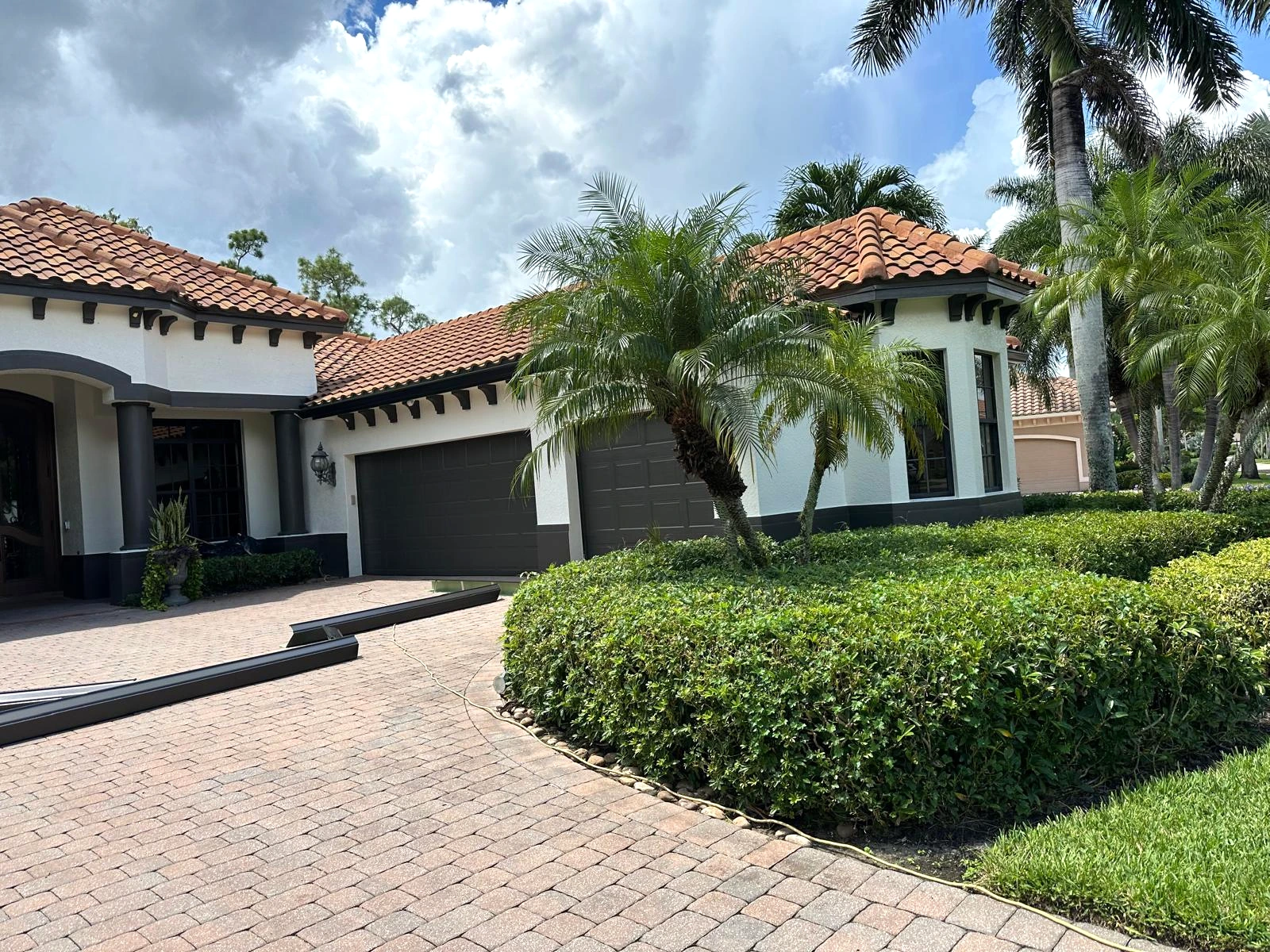
If you have ever stood on your lanai during a summer storm and watched water pour over the front of your gutters, you already know size matters. In Southwest Florida, the question usually comes down to two options: 6-inch or 7-inch seamless gutters. This guide explains how we decide between them, why tile roofs change the math, and what to ask before you sign a quote.
Key takeaways
- Most Southwest Florida homes do best with 6-inch gutters; 5-inch gutters are often too small for our storms.
- Large roofs, steep pitches and big tile roof sections can justify 7-inch gutters.
- Downspout size and placement matter as much as the gutter itself.
- The right size comes from measuring your roof, not from a one-size-fits-all rule.
Why gutter size matters in Florida rain
Our rainy season runs roughly from late spring through early fall, and afternoon storms here tend to dump a lot of water in a short time. A gutter only works if it can carry that water to a downspout faster than the roof sheds it.
When a gutter is too small, water spills over the front edge. That overflow lands next to your foundation, splashes stucco, erodes landscaping beds and can soak the fascia board behind the gutter. Over time, that wet fascia is one of the most common repairs we see.
Size is not about looks or upselling. It is about matching capacity to the amount of roof that drains into each run.
5" vs 6" vs 7"
Here is a quick side-by-side of the three common residential and light commercial sizes. You can read more detail on our 6-inch and 7-inch gutters page.
| Size | Water capacity | Best for | Tile roofs |
|---|---|---|---|
| 5" gutter | Standard | Smaller roofs, older homes | Often undersized for tile |
| 6" gutter | Higher than 5" | Most SWFL homes | Great fit for tile roofs |
| 7" gutter | Highest | Large or high roofs, commercial | Best for big tile roofs |
Many older homes were built with 5-inch gutters. They can work on small, low-pitch roofs, but on a typical Florida home with a tile roof they often overflow during heavy storms.
When 6" is the right choice
For most single-family homes we see in Cape Coral, Fort Myers and Lehigh Acres, 6-inch gutters hit the sweet spot. They carry noticeably more water than 5-inch gutters and still look proportional on a one-story ranch or a two-story home.
Good signs 6-inch is enough
- Your roof is a standard size for the neighborhood, without huge uninterrupted slopes.
- Roof pitch is moderate rather than very steep.
- No single valley dumps a large volume of water into one short section.
- You can fit enough downspouts to keep each run reasonably short.
Most of our seamless gutter installation projects use 6-inch aluminum because it handles typical SWFL storms well.
When to go with 7"
Seven-inch gutters make sense when a lot of roof drains into one edge. That happens more often than people expect on larger custom homes, especially in areas with big tile roofs.
Situations where we often recommend 7-inch
- Large roof planes that feed one long run of gutter.
- Steep pitches, which push water faster and harder into the gutter.
- Valleys where two roof sections meet and concentrate water in one spot.
- Light commercial buildings and large homes with high eaves.
- Homes where 6-inch gutters already overflow even when clean.
Seven-inch is not automatically better. On a small roof it adds cost without adding real benefit. The point is to size for the roof you actually have.
Don't forget the downspouts
A big gutter with too few or too small downspouts is like a wide highway that ends in a one-lane exit. Water backs up and spills over anyway.
When we size a system, we look at how many downspouts each run needs, where they can go without blocking walkways, and where the water ends up. Larger downspouts and smart placement often solve overflow problems on their own. Our downspout installation and drainage page covers options like extensions that move water away from the foundation.
How tile roofs change the decision
Tile roofs are everywhere in Southwest Florida, and they behave differently from shingle roofs when it rains.
- Tile channels water into concentrated streams instead of a thin, even sheet.
- Those streams hit the gutter with more force, which makes overshooting more likely.
- Tile edges can sit higher, so gutter placement and hanger spacing need extra care.
- Tile sheds grit over time, which settles in gutters and reduces capacity.
Because of this, many tile roof homes in Cape Coral and Naples end up with 6-inch gutters at minimum, and 7-inch on the largest sections. If your current gutters seem to miss water during storms, the tile itself may be part of the reason.
Will bigger gutters look too big?
This is one of the most common questions we hear. On most homes, the difference between 5-inch and 6-inch is hard to notice from the street. Seven-inch gutters are a bit more visible, but on a large home with a tall roofline they usually look proportional.
Color helps a lot. Matching the gutter color to your fascia or trim makes the system blend into the roofline. Seamless gutters also look cleaner than sectional gutters because there are no joints every few feet.
How we size gutters during a free estimate
During a free estimate, we walk the property and look at the whole roofline instead of guessing from the street.
- Measure the linear footage of each gutter run.
- Note roof size, pitch and material for each section.
- Check valleys and spots where water concentrates.
- Inspect fascia boards for soft or rotted wood before anything is mounted.
- Plan downspout count, size and where the water will discharge.
Then we give you a written quote that explains the size we recommend and why. If you are also weighing price, our guide on what affects seamless gutter cost in Cape Coral walks through each factor.